Blog #3 in a 7-part installment:
My title refers to our recent Senior Chapel, which occurred on Tuesday, May 22, 2007. Being part of the Senior Chapel Committee gave me access to all of the Senior Chapel secrets. After days and (literally) hundreds of hours spent on perfecting our program, we devoted an hour and a half to entertaining the Senior Class in the first of our final days at Punahou. Senior Chapel kicks off the graduation season so it is generally known to be the event which sets the tone for the rest of the festivities to come. When I wasn't on stage performing a skit or singing a song with my peers, I had front row seats from which I monitored each stage that passed. Following along with each group that performed, I was able to get my half an hour of people watching in. Some performances caused an uproar of applause, shouting of names, and "chee-hoo's", while others were relatively uneventful, the performers unknown. This got me to think about what makes a person likeable or what makes them entertaining. Is it the antics that they perform or the charisma that they exude?
According to "http://www.prometheusinstitute.net/opinion/jh92006.htm", there are 5 characteristics common in likeable people.
1) They are positive
2) They control their insecurities
3) They make themselves valuable
4) They eliminate judgments
5) They are people of conviction
In the time I spent people-watching in Senior Chapel, these criteria are true. The most likeable people in the senior class are those who display these characteristics. I think I am a fairly likeable person, but everyone could stand to be more likeable so I want to try the 5 steps out for myself.
However, it is interesting to see how many 5 step processes there are to improving you character, available online. Since when did our personalities become defined by 5 step processes? Nowadays it seems as though anyone who wants to self-help themselves have the resources to do so. Although most "5-step" programs are effective, I find it strange that they are so popular! Liberal ideals would encourage people to think for themselves and to be their own people, yet our culture is so dependent on 5-step processes. Psychologists, doctors of sociology, and just about everyone else can write about likeability now, and many have made a career teaching people about it. Personally, although it is very tempting to fall for every self-help program, I am also conflicted as to whether or not I want to follow the crowd, per se, and become a robot of societal liking, or just be who I am and say "to hell with them" to people who clash with me. Does it show character if I be who I am suppossed to be or does it show weakness/an inability to mold my personality? I always believed that following guidelines would make me into someone that I'm not, and they would severely restrict my lifestyle, which would be comprised of staying in bounds rather than bouncing where I want. Social restraints are tricky bounds to play with. We never know when we're going to get burned. In this particular instance, though, personality is something that never used to be contained. What kind of world are we living in if we can be classified by 5-step programs? One thing is for certain, though. The programs seem to work! While the suggested tips above seem general enough, they really mean "cater to popular society". How do you show yourself to be more positive? In what way does it come out and make itself apparent to people around you? The way one goes about making themselves likeable is by following expectations--acting in your specified gender, social position, etc.,--while still maintaining the criteria of the program. With all the restrictions that are put up by these things, it is no wonder that our lives are so stressful. [more later?!]
17.5.07
16.5.07
Inversion of the Heart
Post no.2!
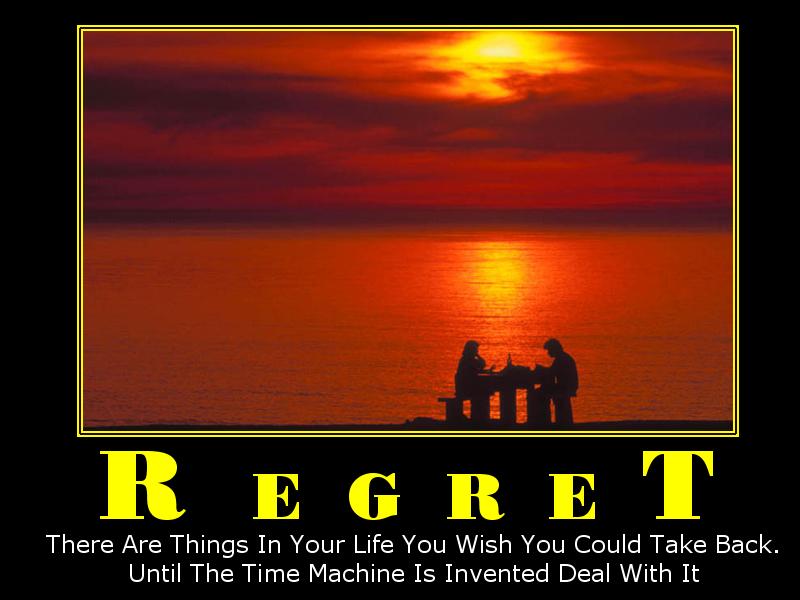
This post has been a long time in the making. I started writing it on the 16th of May, saved it as a draft, and haven't come back to it till today. Recently, with all the hype about graduation and "starting a new chapter in our lives", I have been thinking back to who I am and what I want/wanted with my life. When I was an early teen, I thought I knew what I wanted with my life. Everything was absolute and, despite what my parents said about flexibility, I became more and more polarized towards my desires and goals. There were times when I had the opportunity to embark on new experiences but shut them down because I wasn't comfortable testing the water (cliche, I know). I'm 18 (!) now and about to graduate high school. Guardians in our lives tell us to "live without regret", meaning they want us to take advantage of opportunities that we have now so that we don't look back and wish that things were different. I never listened to any of their opinions and, true to what they said, I regret key decisions that I made. Anyway, as my life went along and I got along in years, I began to develop my identity (which is still in the making, by the way)and carve my preferences out from the ball of clay that I was born as. The kind of regret I'm about to talk about is different from the passing regret that we often feel when we wish something went differently. This blog is only about my most painful regrets and it transcends the shallowness of "Oh, too bad I didn't get to buy a soda at the snackbar" regret.
Thinking back, I would like to share some of the biggest regrets that I've had in my short, but opportune, life.
1. Voice lessons: Just the other day I was singing in the car, humming where I didn't know the words to a song playing on the radio. After three songs of off-key, yet spirited wailing, I said aloud to my mother, "Mom, I wish I had taken voice lessons." She gave me a sidewards motherly glance and she didn't have to speak in order for me to understand what she was thinking. You see, we had had this conversation many times before, especially over the past year with Variety Show and Senior Sing going on. It always went along the lines of her reminding me how she had suggested I take voice lessons--and how I refused time after time. She had a very complete argument against my refusals, but I still fought and got my way. I was stubborn and obstinate in my decision to stick with "tennis, school, and community service" so she eventually gave up. Everytime she gives me a sidewards glance like that I feel how exhausted she is, telling me that I should have listened to her and blah, blah, blah. I'm tired of it, too. Taking voice lessons became more important for me because high school praises people with talent. Life in general commends people with talent because they appreciate hard work. Other than playing tennis, which no one cares about (although they should!!!), I don't really have a show-caseable talent. When you are young, your perspective is shaped largely by your environment. When all of your guy friends believe that singing lessons are "for girls", you have no choice but to say no to your mother's invitation without giving it a try--saving face is the most important priority in middle school. The people I've met through various committees I've been on can sing/dance/act. I love music and God knows how often I sing out of tune to the songs on my ipod. I like to think that I can sing in tune but I know that the sound resonating in your head is way different than the sound that is projected on other people. Regret, regret, regrt...not taking voice lessons is my biggest regret. My mother ended up having the last laugh, as you can see, but it is a bittersweet laugh because she knows that a part of my developed identity will always be off key.
2. Volleyball: Waaaay back when I was 6-7 years old, I started playing sports. When I play sports, I'm referring to karate, soccer, and baseball--sometimes all at the same time! As a kid, you think you're so bogged down with stuff and you pity yourself, arguing that you won't be able to do your homework if you commit to one more extracurricular. Of course, as I think about my whining and how it got me my way time after time, I get upset at my parents for letting it get that far but I get angry at myself for stooping to those levels. And for what? Regret a decade later! Okay, so as the story goes, I never really gave volleyball much thought when I was younger but, as of two years ago, I began to regret not taking it up when the opportunity presented itself. People who don't know me well first comment on my height, then ask me if I play basketball/volleyball. As of right now, I have no regrets with basketball but, as for volleyball, I wish I could answer "yes" to their questions. I have been given the height that many asian kids can only dream of. My parents were ready to support any endeavor that I wished to embark on. I work hard at tennis because I want to be the best, so I know that my passion would have been there. Volleyball is not unlike tennis with its high-speed play, strategy (hit the ball where the people on the other side of the net can't hit it), and requirements (touch, physical height, predictive ability, and quick switches to defense/offense). I plan to play intramural/club level in college, yet I can't help thinking what would have, could have happened if I had only tried. Who knows? I might have actually hated volleyball but at least I'd know that it would never have worked out. The uncertainty that I feel towards volleyball right now is emotionally trying so I regret not giving it a chance. Maybe its just the notoriety that I crave (since tennis obviously doesn't exactly get you front page in the newspaper), or maybe the exhilaration that I see in the eyes of those on the varsity volleyball team--regardless, I find the sport appealing and hard for me to let go.
3. Spirituality: I was first introduced to Christianity when I was born! Haha its true! My mother is definitely a Christian and my whole family has sort of been taken up with her in her beliefs and convictions. However, I have never been able to truly be proud of my Christian upbringing. I used to blame my conservative upbringing for my shortcomings, my naivety, and my social retardedness. There is no doubt that Punahou is a pretty liberal environment to send your child to. Everyone at school seems to be democratic and morality or "living with principle" seems to be second to the social scene. I never really got used to this idea so I was constantly conflicted with what I saw and what I believed. Now that I'm 18, legally an adult, etc., etc., etc., andI have the opportunity to make decisions for myself--some that will possibly affect the rest of my life--I am grateful that I have principles which guide my life. The only way to live is with something to belive in and I know Christianity/conservative views is one way to stay out of trouble, direct my focus, and value what I have. Religion is a really deep topic and I'd like to limit my blogpost to a couple paragraphs so I'm not going to go into extensive detail but I do know that it provides something for me to believe in when all else fails. God is a supreme being who doesn't have a form. His grace and portrayed invincibility transcends my Earthly troubles and I think this is convenient because it gives us someone to look up to, yet never understand. The thing is, I don't really understand Christianity and my heart hasn't been fused with the passion that leads one to devote their lives or make it their guiding principle. You could say that I am a "convenient Christian". I go to it when I need it and omit it when it interferes with what I want. How can that be a good way to live? I'm crazy, I know, and there is no such thing as a convenient Christian. So what do I regret? I regret living between beliefs and not feeling bad about it. If only I had listened to my mother and father like all good kids do...then I wouldn't be in this predicament, faced with the uncertainty of misplaced beliefs and the prospect that when I need Him most, He won't be there.
In conclusion, as I venture out to new bends in the road of my life, I walk away with knowledge on how to make my life better. I have discovered that regretting can lead to two emotions in a person: depression OR fire. I'm the kind of person who wants to live with the latter and use it to make my present and future life better. Fire will push me to make up for lost opportunity and take advantage of scenarios as they come. Regret has changed my identity and I can feel myself evolving from someone who hides from chance to someone who wants more to live and die by it. My regret has turned to passion, and the fruit it bears will be sweeter than that from the tree of mediocrity that I have so far achieved. "Live Your Life" is my new motto and I hope to live everyday but its textbook definition. I wish for all of you that you will live your lives and become people without regret. In my eyes, its never too late to change.
15.5.07
So This Was A Stretch
Hey everyone this is the first of 7(!) consecutive blogs that I plan to post this week! Last weekend, I had an opportunity to attend a YuGiOh card tournament, held in a random card store on the corner of University and King Street. You see, one of my brother's friends is a hardcore Yu Gi Oh card player, and he invited Robin (my brother) to watch him "duel it out". Robin and I had no idea what was in store for us, but we knew enough about card tournaments to understand what was at stake. Apparently, the tournament we were invited to watch was a huge championship tournament in which the only players allowed to enter were those who had won a tournament in the past rolling year's time. The winner of such a prestigious tournament was awarded a box of unopened cards, their pick of 2 rare metallic cards, and a $100 gift certificate to the store. Entry fees weren't too high--about $15 per player, but the tournament was single-elimination, which meant you'd be going home if you lost your first match.
We met my brother's friend outside the store at 9 AM. He--lets call him Alvin--told us that we would have to watch from a distance because the players didn't like it when bystanders got in their line of focus. After his words of advice, we stepped into the store. The scene that befell me was bizarre and scary. There was a wide range of participants--from young kids to middle aged men. Some were dressed in costumes, others looked homeless, and the majority of the people wore glasses. "Nerds!" I thought to myself when I saw the damage. Rows of tables were set up across the length of the room, seated around them were the very people I never thought I'd hang out with. To interrupt this post, here is some background information. I'm not a very tolerant person when it comes to obsessive video gaming, intense anime card playing, or costume wearing. I find myself cringing when I pass students at school who are locked in heated computer game battles or GameBoy DS Lite multiplayer orgies. Being contained in the small space of the card collectors store with two dozen people who I vowed never to interact with was traumatizing! When I entered, they had looked at me with suspicion and I suppose I gave them the same glare back, but when the tournament official stood on a chair and announced the rules of the game, all eyes fell on him, diverted from awkward 'ole me. After explaining the rules of the games, there was thunderous applause and the matches began.
I'm an athlete so I was disappointed that the card game involved a lot of thinking and motionlessness. The battle I kept my eye on was between a teenager around my age (18) and a guy who looked like he was about 30. It may seem like I'm exaggerating this story for entertainment purposes but I'm not--the older guy literally had a unibrow! As I sized him up, I noticed that he was wearing faded blue jeans that were two inches too high above his ankle. His tshirt was a faded black color with some kind of creature on it. At one point, he was stuck in indecision for five straight minutes. He rocked back and forth in his chair, his eyes were locked on the cards, and every so often he would indicate at the cards with his fingers, muttering to himself under his breath. It was unbelievable to watch these people play Yu Gi Oh--they were so fierce, yet so "zen"! Ten minutes later, he was victorious and, as the two compeditors shook hands, the watching crowd clapped their hands. I wondered to myself, "Why is it that we judge these people for what they enjoy doing?" I didn't address the answer until I had left the store.
On the way home, I pondered the question and finally came up with an answer. Most of us are too lazy to try and discover for ourselves what these people are like. Although most of them are people you might be able to pick out of a crowd and label as "nerds", I was surprised that a good number of people looked perfectly "normal". In fact, I felt that the people in the store were a lot less judgemental than the people I hang out with on a daily basis. They applauded each other after victories and patted each other on the back when they lost, which is totally unlike most "manly" sports like football and wrestling. Even tennis is guilty of errupting i the occasional on-court skirmish. Each and every match went about with the most dignity I have ever seen. Although the competition was fierce and some battles were furious, they never forgot that it was "just a game" at the end of the day. I don't remember who won the tournament, and it isn't really important but, what I will remember is the gamesmanship that the players showed. My initial looks of disgust turned to looks of understanding by the time I left--I was captured by the good feelings being exchanged. Its strange how we don't want to take the time to connect with these kinds of people. Although some of them may look suicidal, and most can intimidate with their extensive knowledge of PSPs, they are still people in the end, and its not our place to judge their preferences for clothing, leisurely activities, or outward appearance. What I felt at the end of my pondering was a neat new feeling that, no matter what you look like, in compeditive situations, the best player wins and stigmatizing won't get you an advantage! Competition makes humans out of all of us.
7.5.07
What is a MAN?
Who looks like a REAL MAN? Decide for yourself...

Rafael Nadal/Tennis Player

The Rock/Tough Guy Heroes

Nerdy Chubby Guy

Paraplegics

Fall Out Boy/Bands

Guys who get waxes/40-year-old virgins
...and the list could go on...

Rafael Nadal/Tennis Player

The Rock/Tough Guy Heroes

Nerdy Chubby Guy

Paraplegics

Fall Out Boy/Bands

Guys who get waxes/40-year-old virgins
...and the list could go on...
If Nobody Cried
This blogpost is about Murderball, Never Let Me Go, and the Perks of Being A Wallflower. One theme that is reoccurring among the three cases of Identity is masculinity. What defines masculinity? What are the expectations of males in our society? Why do we adhere so strongly to our social constraints? I hope to examine this theme and, by the end of the post, integrate an example pertaining to my own life.

“Murderball” was the most obvious example of our culture’s obsession with masculinity. Following two paraplegic rugby teams, the movie strove to bring us to realize what it means to be physically disabled, trying to survive in our society. What the movie did for me was more than just show how grateful I should be to have a full, working body, or how paralegals try to do normal activities--it really put a mirror in front of my face and made me look at myself and how I fit into society. Each murderball player had distinct personalities and pervading feelings but what I noticed in each man was, despite their ruthlessness on the court, they had each learned a lesson in life, whether it was related to their accident or not. All of them had kindness in common and I admire their ability to go out of their door each day and face the world with a brave face. We are prejudiced against people who are different from us, and most of us see disabilities with a, “Sucks to be you,” attitude. What we don’t realize is that these people are just as, or, stronger mentally because they’ve had to fight both the public’s eye and their own depression. The men of the movie, Murderball, were undoubtedly athletically superior--I’m not even sure how many “normal” people would be willing to play that kind of game. One point that the movie effectively conveyed is the reaction of others to a person who is in a wheelchair. They automatically assume that the disabled person cannot do things for themselves and immediately offer help. For grown men who had always relied on themselves, this kind of treatment is degrading and can make one feel as though they have been robbed of their masculinity. As we watched the movie I thought to myself, “Do they play murderball because they feel empowered, as if they earned their masculinity back?” It is easy to see why we would equate athletic superiority with manliness. The media does nothing but praise the next up-and-coming Carmelo Anthony or LeBron James, showering them with attention, glorifying their every move. Part of the motivation of playing sports for many young people is because they want to be like the idols they see on T.V., in the newspaper, or on the radio. Money is equated with athletic superiority and who wouldn’t want more of that?! Here is my dorky equation for how our culture fits sports with masculinity:
Athletic superiority => fame/money/sturdiness/machoness/”balls” => manliness
The biggest question is whether or not living by the expectations of others is a healthy outlook on life. Should we live purely on what others define as “right” for our gender? Why can’t there be other ways of expressing manliness besides sports, bench pressing, or violence? Guys who are superior in poetry, for example, will never be considered “sexy” because what they don’t fit into our schemas of toughness or stalwart resilience. Although tennis players are some of the highest paid athletes in the world, they don’t receive nearly the same attention that baseball players do. Baseball is a lot slower, yet it survives as the “American Sport” and is a more notable example of masculinity. Somewhere in between tennis and football there is a line at which we separate the sports we see as masculine and those we do not. When you think about it, sports contain all the elements of “manliness” that our culture so embraces. Football is a popular sport because it requires inner desire and a fanatical lust for competition. For some reason we like to see super buff guys go at each other, disregarding entirely the imminent injuries and ailments that they will suffer from when they reach 40 years old. So is the American dream to play professionally, earn millions of dollars, fame, recognition, notoriety, and then wind up stuck in a bed or in a third triple bypass by the time you’re fifty? Obviously. There seems to be no set limit to the price we are willing to pay to prove that we are manly. The patterns seen in young boys indicate that there is a great peer influence that causes us to give in to dares, or act out of ourselves. You don’t have to be engorged by the spotlight to feel the pressure, either. Guys are just expected to act a certain way, regardless of where they come from or how they truly want to act. I have no idea where it happened but, somewhere in history, we became creatures of expectations and inflexible viewpoints.
Haha this is totally irrelevant but whenever I hear Justin Timberlake say hes “bringing sexy back,” and then I think about what our culture defines as “sexy”, I can’t help but wonder what it is hes bringing back. Is he making poetry writing the new sexy occupation? Is he eliminating the excessive use of bling? Is he bringing styles of the 50’s back? I doubt all of the above…what I think he means is that he is “redefining sexy”! Yeah, totally random.
Back to the post. “Never Let Me Go” was a fun book and, just like “Perks”, it featured a very excitable little boy who was shunned by his peers because he threw tantrums and cried. Why is crying a sign of weakness? Showing emotions are what make us human beings, so since when is it okay to suppress our natural tendencies? Another interesting quote that I heard came from the movie “Something/Raising-Caleb” (I forget the title) right after the high school football team lost its final game of the season. The guys were crying and hugging each other—being all-out “wimps”, as our culture might say. The narrator questioned our acceptance of displays of affection: “Why is it that our culture makes it alright for only the toughest of guys to show emotion”--or something to that extent. That is, essentially, the message that we get as young kids—that we are not allowed to cry or make a fuss of anything unless we have already secured our claim to manliness. Tommy (from NLMG) was a very sensitive character who lived life, in essence, looking at things through different lenses than anybody else. He questioned norms, spoke up for what he believed in, and never stopped being himself. Why can’t we all be like Tommy nowadays? First of all, the kinds of people most supported by our culture are those who are tough, humorous, and never cry. We base ourselves off of what we see—boys like Tommy never make front page, or even the newspaper for that matter.
“Perks of Being A Wallflower” is an awesome book! Charlie is definitely an unconventional sort of guy. Because he is only a freshman in high school he seems to be in the middle of knowing and not knowing. As a junior schooler, you are oblivious to high school life, while as a senior, you own the campus and know everything. The point at which we come into Charlie’s life is during a period of revelation for him—he begins to learn about girls, guys, sex, drugs, and, most importantly, the social scene in high school. Charlie is unpopular and the sensitive type of kid mentioned earlier in this post. At first glance, one has to wonder how he has survived so long. His love of literature, penchant for writing, naivety, and his choice of friends befuddle even the most knowing social psychologists. Who is this kid? At first, I thought Charlie was a little girl with a boys name—how could anyone be so oblivious to the “way things work”? After awhile, though, I began to see Charlie as a character worth admiring. He is so honest with himself and with the readers that I couldn’t help wishing I was as carefree.

I know exactly what Charlie feels like because I was once a new student and it took me forever to understand what it meant to be a boy/young man at our school. When I first came to Punahou School in 1996, I was definitely “behind” in the fads and overall social scene. Having come from a small private school with one first grade class, Punahou’s 8-class second grade was huge to me. I used to wear Gap collared shirts, or my favorite red Pokemon shirt to school, never thinking about what other kids thought. However, as time went on, it seemed inevitable that I would have to confront the stares and whispering sooner or later. I ditched the prep style/cartoon style and went all out with Quiksilver—there was a time when I refused to buy any brand but Quiksilver! Kids at school would have Gyro rings or Gameboys, chat about the latest PG-13 movies, and show off their glowing collections of Pogs then Pokemon cards then Yu Gi Oh cards. I was a complete dork through all of this. I would try and start a collection of cards then lose interest. I would beg my parents to buy me the latest technology, or take me to see “Scary Movie” to no avail. I blamed them for keeping me in the dark about the wonders of fads but I realize now that it was for my own good. Being trendy isn’t always the best way to go and I struggled with this realization for a looooong time. There is also no denying it--schools definitely are the breeding ground for our social roles and peer pressure. Of course I felt/feel the pressure to be rough and tough but I realized that people can see right through you so it is useless to pretend. Of course you have to wonder whether or not the teasing is worth staying true to yourself. Perhaps it is better to act than to not make any attempt at all. Embracing who you are is what will make you the most happy in the long run and the feeling of self-actualization that you get when you are free from peer pressure is indescribable. Getting to high school and discovering that drugs actually happen at Punahou was so traumatic for me. I always assumed that, because we receive so much warning and information on what drugs/alcohol can do to you that no one would do it. As a freshman I was still trying (and failing) to be trendy. One of my shortcomings was my naivety. Just like Charlie (!), I was out of it and did not have experience in understanding lingo or suggestive talk. If there were parties in freshman year I never heard about them, if someone was flirting with me (highly doubt) then I probably turned them off, if there was any kind of rebellious group I did not recognize it. As high school progressed, I learned more and more and became less and less of a “virgin” to information. I was always so conservative—and still am—so it is/was hard for me to blend in. If society is always going to demand that I bend my values and compromise my character then I hardly think it is worth the trouble. The same goes for masculinity. Why do we show preference for one kind of man? If people’s outward portrayals replaced genes in indicating who would survive (i.e. Natural Selection), and a plague wiping all of our “manly-men” out came along, then who would be left? When we strive to transform our entire man population to copycats of the brusque, brawny “ideal” that we emphasize so strongly, we cannot expect much in the area of choice. Manly men may be on the market now but, if times change, it will be interesting to see who assumes the throne.


4.5.07
Inappropriate Quote

this is from Murderball...its stuck in my head so im sharing it w.you now.
"We're not going for a hug. We're going for a f**king gold medal." --Zupan
As soon as I heard the quote I knew that I had to share it with the world. What Zupan said shows how much intensity the players have for the sport, but it also has an undertone of masculinity in it. Just saying.
27.4.07
Unethical&Unfair

Of course, the issue behind the book is the prospect of human cloning. Although it is only a dream as of now, there will eventually be a day when scientists break through and actually do it. It is hard for us to fathom the ethical issues that will be raised upon conception of the first clone, but we can expect a fight on both sides of the issue as to the morality that is being sacrificed with us “playing God”. I am not pretending to know a lot about cloning or how far they are in the process of finding a viable method rather, the purpose of this post is to express my concerns. First of all, the reason “Never Let Me Go” was so effective was because it shows us what our future could look like. The point at which we dive into the era post-human cloning is way after the issue of ethical cloning has been debated. Instead, the hot issue was that of the rights of clones. “Madame”, Ms. Emily, and the rest of society were waiting to see if clones had souls. If they did then it might be necessary to treat them as normal people, whereas, if they were empty shells of people then it would be alright to deprive them of the rights normal people receive. As the book closes, the issue has died down and people are turning a blind eye to the unethical way clones are treated. The sad cycle that Kathy H., Tommy, and Ruth were caught up in was unique in that they received schooling and were prepared for their roles in society. Clones not admitted to schools like Hailsham represented the alternative to the kind way Kathy and her friends were treated. Throughout their lives, they saw the shift that society demanded--from educated, well-treated clones to shells that were disregarded in light of their disposability. What I thought was wrong with the whole issue was not so much human cloning as the way they were treated. If our society does progress to the point where we have clones for harvesting, I would very much be on the side of ethical treatment for them. When I say “ethical treatment” I mean treating them as though they were real human beings. Of course they won’t be able to have all of the same freedoms that we do, simply because they have a purpose and a final destination in life, but I would like to see them eased into their roles. What the book did not express adequately was the unrest that happened, or didn’t happen, in the clone community. Kathy, Tommy, and Ruth all knew about harvesting, and we know that they weren’t kept in the dark about it so I would have liked to hear about any of the clones getting angry. How is it that all of them accepted their fates willingly? If they were at all educated about life outside Hailsham and their cloning communities then I would expect them to see the differences. Growing organs in Petri dishes are way different from the method that is brought to light in this story. Using human clones for their organs, but treating them in an inhumane way sucks the logic out of the purpose. Why not just grow organs in Petri dishes or on mice—two solutions that are possible, and much less debatable? I don’t think it is right for us to play God in saving people beyond what is meant for them. If we had clones for harvesting then there would be no shortage of organ donations, but then a lot less people would be dying. I know it sounds awful to say, but if someone was meant to die then it is disrespectful to the higher power in your life--no matter what religion you believe in—to save them. When we take all these extra steps to keep people who are very sick, alive, we begin to cross the line between fate and a total takeover of God’s job. In the end, it appears as though we control life and death, leaving nothing to chance. Now that I’ve read the book cover to cover I realize why it has been so highly acclaimed. The book is suspenseful, yet carefully incremented so that we get a complete understanding of their lives before it moves on. The telling of the story in first person led me to see the soul in Kathy so that I am still conflicted over whether they way they were treated was acceptable. I saw nothing different about the way Kathy and I come upon logic—there is clearly a step-by-step process that each of us goes through, with emotions influencing the journey. We have to remember that she is a human being and the only thing that differentiates her from me is our conception. How, then, could our race have gotten as far as it did on the road of cloning where people don’t care about what happens to people who are fundamentally the same as ourselves? It was disappointing to see our species progress that far. To think that the first human clone might be created in my lifetime is scary and I hope that our world does not see parallels with Kazuo Ishiguro’s.
21.4.07
Never Let Me Go
I have to say that, after an excruciatingly slow start, Never Let Me Go has progressively grown on me. It now has a spot in my top 5 favorite books of my teenage life! Apart from the roundabout way the author writes, it is a beautifully crafted story that give you a feeling that is impossible to describe. If I had to somehow describe the feeling I'd say that it makes me feel like I thought about something for a long time, without having to expend mental energy on it. Everything Kathy says to us leads up to a conclusion that is neither rebellious or climactic, instead it makes me feel like I just faded into the sunset with a full stomach.
15.4.07
I Am the Next Apprentice

"You're FIRED!"
I'm sure you have all heard the famous two-word doomsday phrase that Donald Trump screams when another contestant on his popular show "The Apprentice", goes down. How accurate is this show compared to real life business situations? Is this how typical boardroom sessions go? Is this how one gets fired from their job? I've heard contestants reveal in interviews that Mr.Trump's show is the, "most difficult interview process" that they've ever experienced--I'm sure it is, too! Reality shows tend to exacerbate problematic situations in order to capture audience attention and, as dignified as Donald would want his show to be, there are many aspects of it that only television can concoct. Pressure by networks and their affiliates to produce high ratings leads directors to exaggerate and twist what is labelled as the "truth". My favorite TV shows tend to be those that are the most real. Watching Maui Fever, Laguna Beach, I Love New York--anything on MTV or VHI, in fact--hurts my head because its all so fake. Being able to spend a quality one-hour watching The Apprentice is what makes my Sundays great. Although I cannot overlook the fact that "real life is usually boring" being the reason for plot lines being boosted, I nonetheless am able to enjoy shows that come close to the truth. You can never expect any given show to represent what real life is really like, but the derivations are what makes--or breaks--a successful show. Successful reality shows are those that give us a balance of real life and what I call "televisionland", so that we are never too bored or too unconvinced. Donald Trump's confidence and goldenrod hair, along with his inspiring stories and words of wisdom make him a realistic boss. The contestants on the show, who come from normal lives, exhibit all of the ruthlessness that is needed to survive in today's cutthroat business world. Each person develops overtime and we find ourselves choosing our favorites based on our impressions of them. What we don't see, but surely realize, is what goes on back stage. There are dramas that go unseen by the public. "The Donald" gets his hair slicked back from time to time, especially before he thrusts his upper body forward in delivering his final line.
 Heidi!
Then there is the issue of whether or not the finale has found the right candidate for the job. In most reality contests, I find myself screaming at the screen because the wrong person won. The Apprentice is no exception. One moment you could be the star of the show and the next you're shipped back home. Last week, for example, my favorite contestant, "Heidi", got booted off the show for messing up on one project whereas she had always been Donald's favorite on past episodes. Who am I to disagree with a billionaire, right? Wrong! Although I only know Heidi from the 12 or so hours I've seen her this season, while Donald spent 12 weeks on set with her, the purpose of the show is to find the next apprentice and the only time that matters in finding this apprentice is the time they show on TV. The compilation of clips that comprise the show expose key mistakes and try to give us hints at who will be fired. Heidi did screw up on that one task but she was awesome in all the other tasks. Would the star of a real interview process get let go just because they make one key mistakes while other people have made many small ones? It doesn't seem right to me and I'm sure I'm not the only one who has seen "the best" get voted/fired/unloved off the show. In addition, Donald is not on-hand to see his contestants compete. He gives no indication of having watched the tape before the boardroom sessions and his assistants rarely see anything meaningful. Most of the decisions are made, in actuality, by the other contestants. If they mutually decide to pick on an outcasted contestant then that person is probably going home! I've seen it time and time again, especially in the shows earlier stages. How can Trump make such an executive decision when he barely even knows the candidates and their work habits or true morality on the job? If he does get more personnal attention with the candidates then I think the show should convey it. From what it looks like now, Donald makes a decision based on 1) results; and 2) what the candidates say. This looks bad on TV, if you think about it.
The last pet peeve I have with reality contests is that they can sometimes be rigged and often feel scripted. American Idol, for example, lets go of its contestants when they are discovered to have "dirty pictures" on the internet, have once stolen a car in high school, etc. The Apprentice, I'm sure, is not without its scripted moments. How personnal is Donald's final decision, anyway? Is the winner truly someone who best represents the company by their smarts, fast thinking, and resourcefulness? If you look at the record of past winners of the show, all of them are young, white, and very attractive. This season, two of the three black candidates left in the first three weeks and, as the end nears, the only recognizably ethnic person is Korean. One has to wonder how much longer he will last! (I am in no way accusing Donald of discrimination, btw).
Overall I love the show but some factors just don't add up, as is expected with all reality shows i guess. Watch The Apprentice: Sundays, 9pm, channel 8 (cable)
Subscribe to:
Posts (Atom)